
Interview · Board game design
This interview was originally conducted in Spanish and translated into English, staying as close as possible to Germán’s own words.
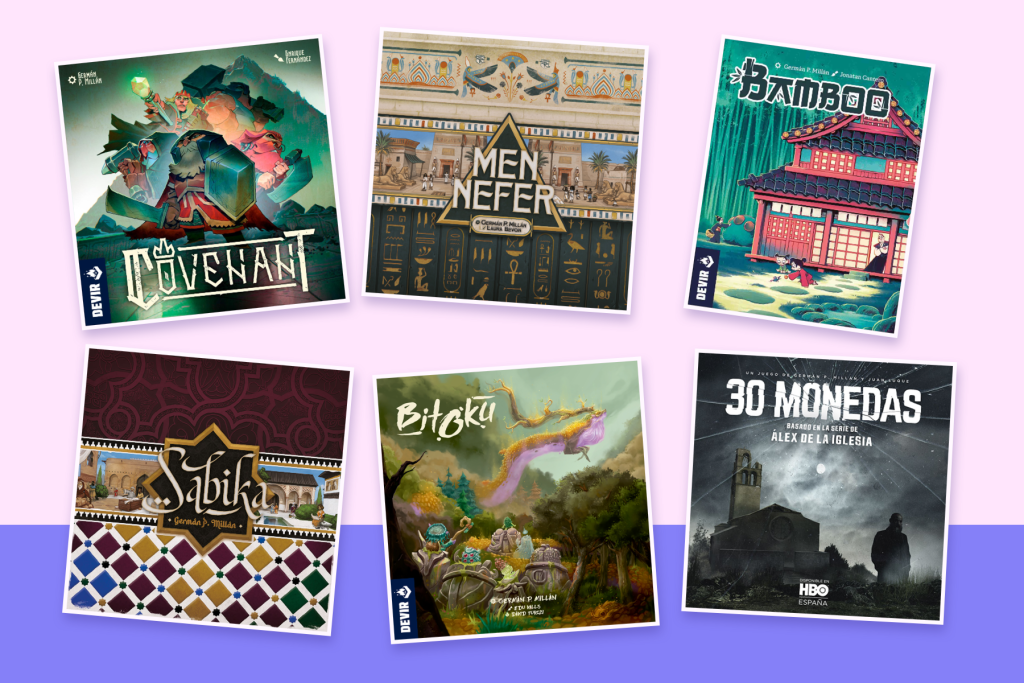
If you’re into eurogames, you’ve probably heard the name Germán P. Millán. And if you haven’t, chances are you’ve seen one of his games on your local game store’s shelf: Bitoku, Sabika, Men-Nefer, Covenant… Germán is one of the most prolific Spanish designers working today, with games published by Devir, Ludonova and Ediciones Primigenio, translated into a whole bunch of languages and recognized abroad (Sabika won the 2024 Nederlandse Spellenprijs for Best Expert Game).
His designs have a very recognizable signature: European-style games that reward planning and optimization, with just the right amount of interaction and themes he’s passionate about, from the yokai of Japanese folklore to Nasrid Granada and ancient Egypt.
But what we really wanted to know about is what happens before a game makes it into the box. So we asked him about his process: how he prototypes, what he looks for during a playtest, why he sometimes goes against his playtesters, which of his games changed so much they’re almost different games, and what advice he’d give to someone designing their first game right now.
If that’s you, this interview is for you.
3 takeaways
“To get to something good, you have to break a lot of things along the way.”
“In board game design, rushing is your worst enemy.”
“You don’t create the game for yourself, you create it for hundreds or thousands of players.”
Who is Germán P. Millán?
Thank you so much, Germán, for this interview. For those who don’t know your work yet, how would you introduce yourself as a board game designer, and which of your games would you highlight so they can discover your style?
I like designing European-style games that reward planning and optimization, along with a certain degree of interaction between players.
I think the game that best defines me as a designer is Men-Nefer, although Sabika poses a greater, more demanding challenge, something that fits my taste as a player better.
His games, in one sentence
If you had to describe each of your published games in a single sentence or word, how would you do it?
- Covenant (2025, Devir): A very uncomfortable game for the player; it doesn’t make things easy for you at all.
- Men-Nefer (2024, Ludonova): It may sound contradictory, but it’s elegant and complex at the same time.
- Bamboo (2023, Devir): A small game, but a lot brainier than it looks.
- Sabika (2022, Ludonova): A great optimization challenge with extremely high replayability.
- Bitoku (2021, Devir): A rich, open game packed with possibilities.
- 30 Monedas (2021, Ludonova): A solo game; maybe we went overboard with the difficulty. It’s very, very hard.
- Orb Hunters (2019, Ediciones Primigenio): Chaos and interaction, one card at a time.
- Kingdom Defenders (2018, Ediciones Primigenio): I like its kind of interaction and the way it handles the game’s tempo.
Career and design philosophy
Of all your projects, which game taught you the most about the game design process, regardless of its commercial success?
There’s no single game that teaches you everything. Like any creative process, you keep learning and maturing with each design. Experience is a qualification you earn through hours of work. The way I approach a new game is very different from how I made my first one, and with each new project that keeps getting refined. You discover where your weaknesses are and where you feel most comfortable. Self-criticism is what makes you grow, and that’s important.
In your view, what makes a good eurogame? When is it worth playing again and again?
A solid, simple and deep game system. With just the right doses of interaction, and never frustrating ones. And on top of all that foundation, something very hard to achieve: it has to be fun. That’s the most important thing.
Is there any belief about game design you’ve had to let go of after years of experience?
I’ve let go of ideas I’ve come up with. As a designer you try to do things nobody has done before, and when you test those ideas you understand why nobody does them: they don’t work. It’s quite logical that games resemble each other; there are a lot of minds thinking about mechanisms, and when we dig deep into them, we reach similar conclusions.
Inspiration: from theme to mechanics
You’ve created games with themes that are very personal to you, which show, for example, your love for Japanese legends, your homeland or Egyptian mythology. How much does theme influence the way you create mechanics? Is there an example you’d like to share?
Theme is a fundamental pillar of my process: I need to be passionate about it to feel the spark to create that game. Starting from the theme, I begin writing down ideas that could represent it; sometimes they’re more abstract, and other times more consistent with the theme.
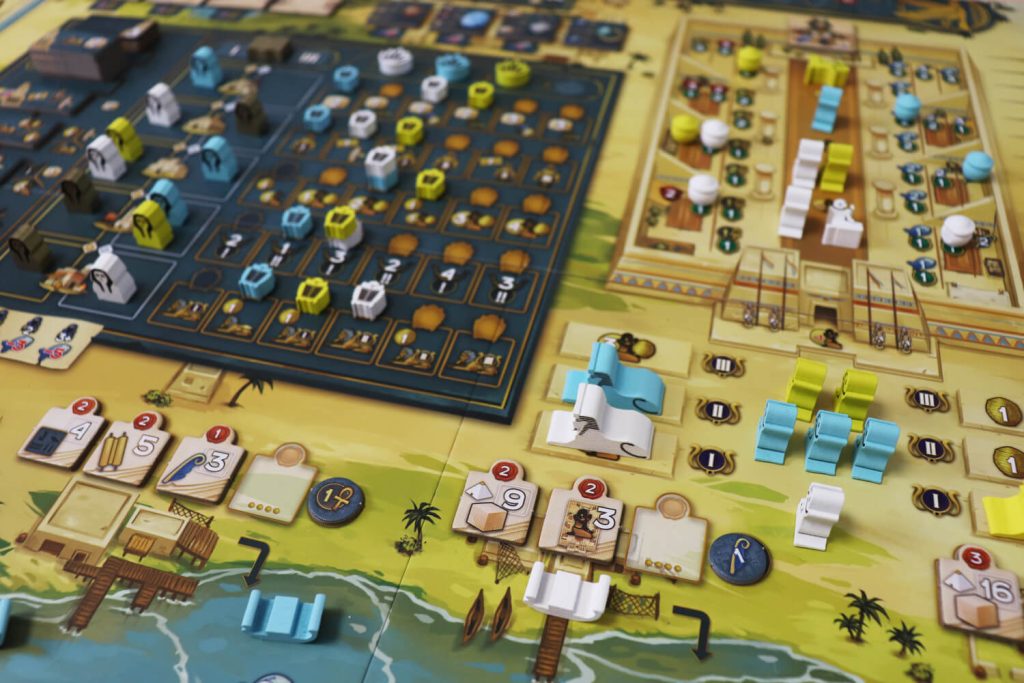
One example could be the Houses of Life of ancient Egypt, where scribes and astrologers were trained. That gave rise to the mechanism in Men-Nefer where your apprentices increase the strength of their actions in the different areas of the game.
It’s quite a thematic mechanism, as I see it. And without reading about the Houses of Life, it would never have occurred to me.
Prototyping
A prototype needs to be flexible and agile, but still stay clear when it comes to playtesting. How do you feel your way of prototyping has evolved with each new game you develop?
My prototypes have always been very polished in terms of graphics and layout. But that’s to be expected, since I come from a fine arts background and spent many years doing graphic design work, as well as drawing, painting and illustrating since I was a child. I’ve always had artistic interests.
The prototype is a very valuable opportunity to show the publisher my vision of the game and how its elements are implemented together with the theme.
Now, with AI, we have a very powerful tool to “dress up” our prototypes much better. We can capture the illustration style and the world we imagine in our heads, and show it to the publisher in a very precise way.
Of course, I’m a firm supporter of artists. AI as a tool is very useful, but the artistic value of an illustrator is irreplaceable. In a prototype it helps you; in the final art it can be a reference to lean on, but never the final result.
Iterating: playtests and changes
During a playtest, what signs do you look for to detect that a mechanic isn’t working, even when players say they’re having fun or contradict each other?
Of course, there are lots of conversations around the game; playtesters are vital to polish and finish a game. It’s hard to explain, but one of the things I’ve learned is to trust my intuition. Without being able to explain why, there are many times when I disagree with the playtesters’ arguments, out of pure intuition, because something tells me that’s not the way to go and that something else should be done or implemented.
I think this comes from experience and background, from having faced the same problems many times and having somehow understood what needs to be done, changed or adjusted. The same thing happens to me when playing other games: sometimes I see very clearly that something doesn’t quite work, or what problems it has. And I find myself daydreaming about ways to fix it. I imagine this happens to all of us designers who have been making games for many years.
That said, I’d like to stress that playtesters make very valuable contributions and corrections. You learn from them, from the way they see games and from how they play them.
How do you turn what you learn in a playtesting session into concrete changes for the next version? What helps you decide what to change first?
I’ve learned that you have to make changes very gradually, because you need to clearly see the impact of those changes. If you modify a lot of things, you can’t clearly see why things are happening the way they are.
There’s no magic formula for knowing what to change first, but it’s better to start with the “big things” and, as you fix them, move on to the small ones.
For example, the core mechanic of the game, the thing that drives everything, is something you have to solve before balancing whatever passive effects your game may have. Those passive effects should probably be the last thing you work on, because they depend on all the parts of the game working well and, above all, on you knowing how they work, so you can create the passive effects that modify how the game works.
You realize along the way which part is jamming the game, and what you need to tackle first to keep moving forward.
Of all the games you’ve designed, which one changed the most from its prototype version to the published game?
Men-Nefer and Covenant changed so much that we could talk about several different games across each of their versions.
Sometimes you have to be able to realize that something isn’t working, and at that point you have two options: either you fix it however you can, or you wipe the slate clean and start over.
My playtesters sometimes laugh about the different versions of each of my games. But that’s my process: I believe that to get to something good, you have to break a lot of things along the way. You shouldn’t get attached to an idea that seems good in your head. If you test it and it isn’t, that’s fine: you make something else that does the same thing, but better.
Advice for new designers
Many aspiring designers clearly struggle to prototype efficiently. Do you think experienced designers prototype differently from beginners? How does it show?
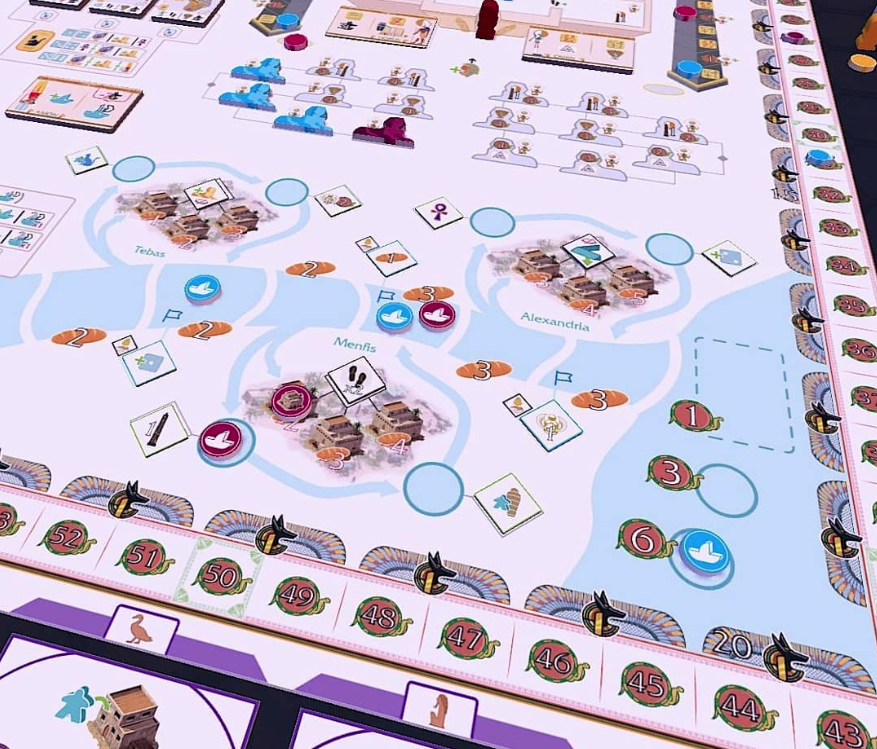
Of course, I guess that’s only logical. It also matters a lot whether you have artistic knowledge or skills. A board game designer doesn’t need to know how to do layout, but knowing how is undoubtedly a huge help. I’m lucky enough to be completely in my element with design software and a graphics tablet.
Looking ahead, what would you like to be able to do while prototyping that is still difficult, slow or too laborious today? How do you think digital tools could help make that happen?
Honestly, I don’t miss anything. The prototyping process should be long, because it helps you soak up your game, absorb everything you can and think a lot about those ideas. In board game design, rushing is your worst enemy; that’s something I can state with absolute certainty. Shortcuts can be useful, but getting tangled up in the process is more enriching for the game’s development.
What advice would you give to someone creating their own game right now?
Lots of self-criticism, and knowing how to listen to playtesters’ opinions: not all of them are valid. You don’t create the game for yourself, you create it for hundreds or thousands of players. So you have to set your ego aside and make room for constantly asking yourself whether what you’re creating is truly fun.
What’s next
Tell us, what can we expect from you in the future? Any new projects on the horizon?
Right now, Las Máscaras de Nyarlathotep (The Masks of Nyarlathotep) is being wrapped up, a project almost six years in the making that has cost me my sanity. We’re also finishing Romulus, which continues the Thaumata saga made up of Sabika and Men-Nefer. And looking further ahead, I’m already working on three projects planned for 2029 onwards. So you’ll have me around causing trouble for at least a few more years.
Thank you so much for your time and for sharing your knowledge. Our mission is to bring value to future designers looking to carve out a place in the board game world, and your contributions help us a lot.
Thank you, and greetings to all the readers.
Follow Germán
Prototyping your own game?
Germán puts it plainly: you don’t need to know layout to design board games, but it helps a ton. If design software isn’t your thing, that’s exactly what Tabletop Creator is for: design your cards, boards and components, change one template and every card updates, and export your prototype ready to print or to Tabletop Simulator. Spend your hours thinking about your game, not fighting with layouts.